Listening to two acquaintances argue about if AI art is "art" is not a new experience for me, the now eternal debate between Doomer and Boomer. In this particular context, I'm listening to it as I wait for my surprisingly expensive iced latte in downtown Copenhagen. This coffee shop is one of my favorites, a small hole in the wall where the shop starts on the second floor. Everything is hand painted in a way I associate with the hippie roots of Copenhagen. They have an older golden retriever lying on the floor in the heat with a sign on his crate telling people not to bother him if he's taking a break. "Sometimes he needs his alone time". Me fucking too I think as this conversation drags on.
There is a certain irony to the people having this conversation. One is a well-off tech worker, telling the much less well-off artist that the thing he has made through a prompt and the thing she practiced for years to make are functionally the same thing which is a classic AI Boomer argument. "I'm not saying I would sell mine, but isn't the point of art the emotion it brings out when you see it?" The artist seems somewhat baffled by the question, which I understand because she doesn't see the world as a machine that inputs ideas and outputs profit. I use some LLM tools while programming but I would argue I am still more Doomer than Boomer.
As someone who straddles these two worlds, both working for large corporations and interfacing with these borderline sociopaths in business casual pants and expensive watches and also as someone who finds the joy in their life through the celebration of the artistic output of others, I understand them both. One sees it as a capacity problem, a barrier broken down so that now he can do everything and no choices have cost. The other sees it as a baffling attack on her passion. You could always learn to draw, nothing was ever stopping you is her refrain. Which is true but doesn't resonate with him, in part because I suspect he believes he could do anything.
But I hear this argument enough that I thought we should talk about it, if for nothing else than to give me something to think about as I stare at the dog crate and hope the dog comes out to say hi.
The Smell of Ink and Nerds
So I love books of all sorts, including a lot of very trashy books. Nothing I enjoy more than a Space Marine ripping the head off an alien. One medium that I really like as an adult with limited free time are comic books. I love everything about them, the feel of the too slippery covers and the rub-off on your fingers of old comics. I love how weird they are, how stories that don't work are dropped on the floor and never mentioned again. It's like watching someone build a railroad as the train rides down the tracks.
My routine for years was to go pick up my pull list and then wander around for a bit while they assembled it. This is how I found great series like Sandman and countless others that ended up being some of my favorite reads. One of these pull list discoveries I made while standing around surrounded by the delightful acidic smell of a comic book shop was The Black Monday Murders. You can find it here.
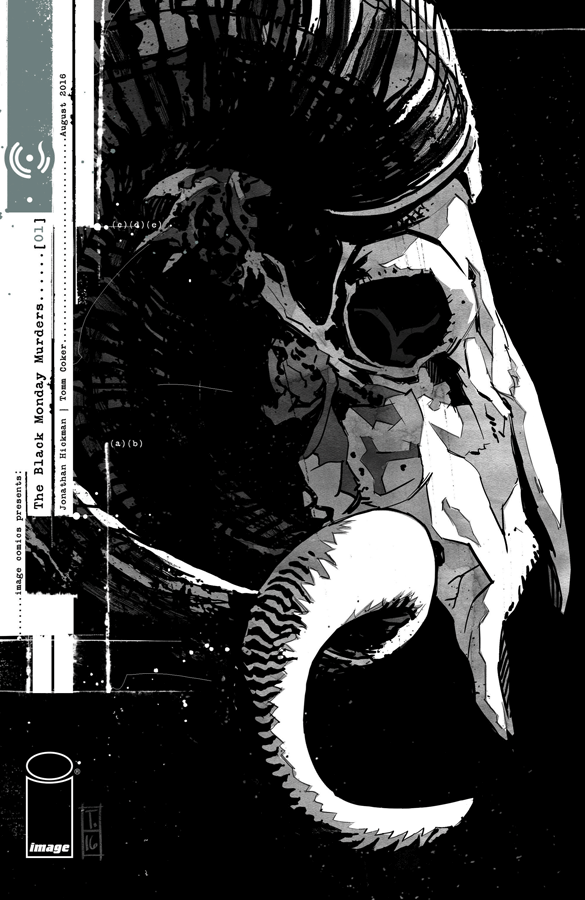
The story of The Black Monday Murders is genius and I won't ruin it. You can read the first issue for free at the link above. My friends and I still text each other "All Hail God Mammon" when the stock market goes way up or down. The basic concept was "what if money and magic were related and banks were basically worshiping the god of greed". I consumed this series and fell in love with it.
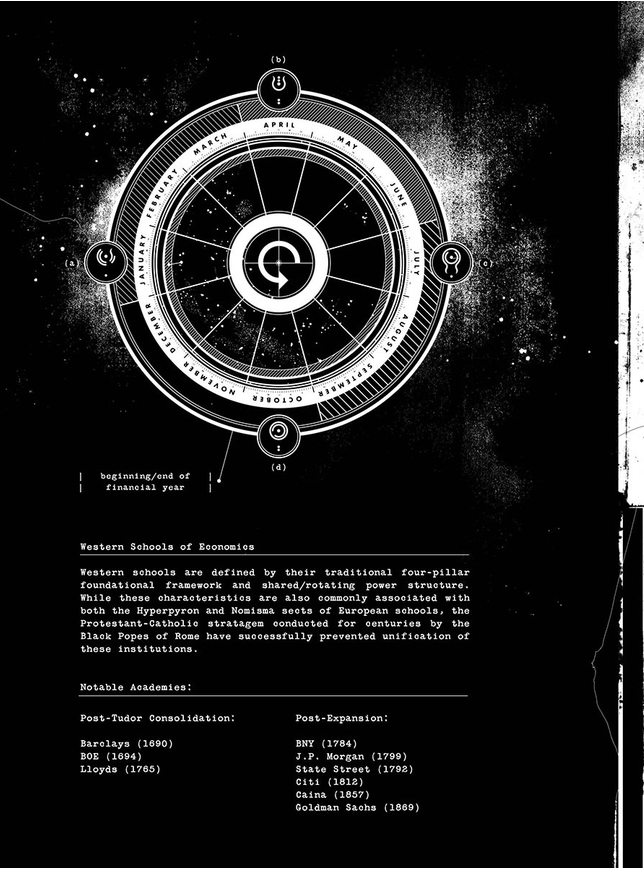
I mean come on what's not to love about that.
So the first issue comes out in 2016, we get a....very slow drip of new releases through 2018. 2018 is when I got issue 8 and then that's it. Since then we have had teased new issues, every year or so someone posts on social media "oh there's a new one coming". There is a lot of media like this but for me, this is the one I think of most often as "what-if". I think it is a genius idea that is especially relevant in today's world and I am sad that we may never get another one.
So I was expressing this to a boomer friend who casually responded with "why don't you just make your own"? LLMs allow us to generate lots of artwork like this now, you can maybe cobble together a story, wouldn't it be fun to make your own issue for your own personal consumption? To him, this is the perfect use of this technology, allowing a fan to make more of the thing they love. To me it feels like if someone said "if you are hungry, there's a puppy over there, just pop that bad boy in the oven for 2 hours and have yourself a snack".
To me that's not a tribute or the act of a fan. It's making a forgery. The thing has no value to me as a reader if I removed it from the entire creative context of its creation.
What value does a forgery have?
There's a great short essay by the philosopher Denis Dutton from 1979 called Artistic Crimes. It's about forgeries, not AI, but every paragraph rings like a bell for the argument I keep having. You can read the entire thing here (it's not that long I promise).
What I was struck by was how many parallels you can draw between the two issues. Like AI art, the existence and occasional acceptance as real artistic works of forgeries has a special power to discredit the art critic and historian community. The success of a forgery creates a belief that the entire criteria by which art is judged by is fundamentally flawed. If something is amazing before you knew it was a fraud and trash after you came to find out it was fake, then the assessment of art has no basis in aesthetic properties. It is pointed to as a demonstration that the only reason a "masterpiece" is valued over a random painting at the flea market is that a famous person made the first one. Effectively all art is bullshit and LLM slop/forgeries are equally valid because they invoke the same emotions in the audience before the deception is revealed.
Now everyone, or at least everyone whose opinion I value, can agree that knowing if a piece of art is real of fake matters in terms of both its monetary value and its value historically. Even the most staunch Boomer I know would admit that fake paintings shouldn't hang in museums next to real ones. Where the two groups diverge, in LLM art and forgeries, is whether the assessment of its aesthetic merits should not be impacted by its status as real or fake.
Part of what is impressive about the performance of making something is that you are celebrating how much a person or group of people succeeded. This is why we delight in stories like "Stardew Valley was made by one person in his house for years with no money hand-drawing each piece of art in the game, so intense was his love and commitment to the project". You don't have to know that to enjoy the game, but pretending it changes nothing about how you enjoy it once you do it is nonsense. Same with movies like "Good Will Hunting". Sure it's a good movie, but the story of two childhood friends making it for not a lot of money and one of them leaving Harvard to shoot it changes your connection to the material. It can't not. You love the thing, you learn more about the human story behind the thing, you love the thing even more.
Part of the magic of wandering through a museum is that I cannot do the things the artists here have done. I cannot make modern art, I don't have a vision like those people do. I don't have the strength of character and conviction to commit to something like they do. I frankly lack the fucking spine to stand there next to a creation of mine that a thousand morons a day will look at and say "I could do that". No you couldn't and that's part of why its impressive to look at.
Forgeries, like LLM art, are misrepresentations of achievement. You want the same credit and respect as someone who actually did a thing, but you haven't done the thing. Once that discovery is made or, frankly, once that is suspected, the relationship to the work has been permanently changed. I'm no longer viewing it from the perspective of the output of a human who I want to succeed but instead skeptically as someone attempting to steal credit for work they didn't do.
The question of efficiency
The other argument the boomers make is about bottlenecks. My favorite comic isn't finished because the author is busy and human. But we could feed the machine the premise, let it crank out pages, have him touch them up, and, bim bam boom issue nine, ten, eleven, a hundred.
Let me be clear that I'm not precious about everything in my life. I am not one of those people who thinks everything must be handmade by candlelight. I love a Dunkin Donuts coffee. I love the ridiculous bucket-sized cup, the sugar content that could kill a horse, the milk-adjacent liquid that has clearly never seen the inside of a cow and is shelf-stable until the heat death of the universe. I love standing in line behind two guys in Carhartts complaining about a foreman named Chris who is, and I quote, "a real fucking prick, man." I could eavesdrop in an IHOP for the rest of my natural life and die happy.
Sometimes I want the $22 burger. Sometimes I want the McDonald's cheeseburger, no pickles. Both are fine. Both have their place.
But here's the thing the boomers keep missing: I get to pick.
The choice is the thing. And the AI rollout, as currently constructed, is designed to remove the choice. Not offer a new option but replace the existing one. The boomer argument, stripped of its language about productivity and democratization, is really this: we're going to make the cheaper thing, we're going to stop labeling it, and you're going to keep paying the same price because what are you going to do, not consume media?
Because it is cheaper and faster to make doesn't make it something anybody wants. My favorite local bakery makes a great sourdough that I try to get whenever I can. If they sell out, I don't buy a loaf of Wonder Bread and pretend it's the same thing. I go home without bread. Sometimes the honest answer to scarcity is going without.
This is what boomers can't hear. They think we're arguing about the quality of the output, and so they keep showing us better and better outputs as if that will close the deal. But we're not arguing about the output. We're arguing about what it means to receive a made thing from another human being. Every comic in my pull list, every trashy Space Marine novel, every weird indie game are letters from strangers who cared enough to spend years of their lives making something for me to find. The value isn't in the artifact. The value is in the fact that somebody bothered.
A machine cannot bother. It can only produce.
I would rather have eight issues of The Black Monday Murders and the ache of never getting a ninth than a thousand AI-generated issues that continue the story forever. The ache is part of the art. The waiting is part of the art. The possibility that the thing I love might never be finished is part of what makes it real. Forgeries don't ache. They just fill space, like the paintings in a Best Western lobby, hung there because a wall needed something on it.
All hail God Mammon. He always did prefer the cheaper option.